Is your brand in the AI answer?
When buyers ask AI for a recommendation, it names three to five businesses, not ten blue links. Brand Visibility shows whether yours is one of them, how each engine describes you, and who it names instead.
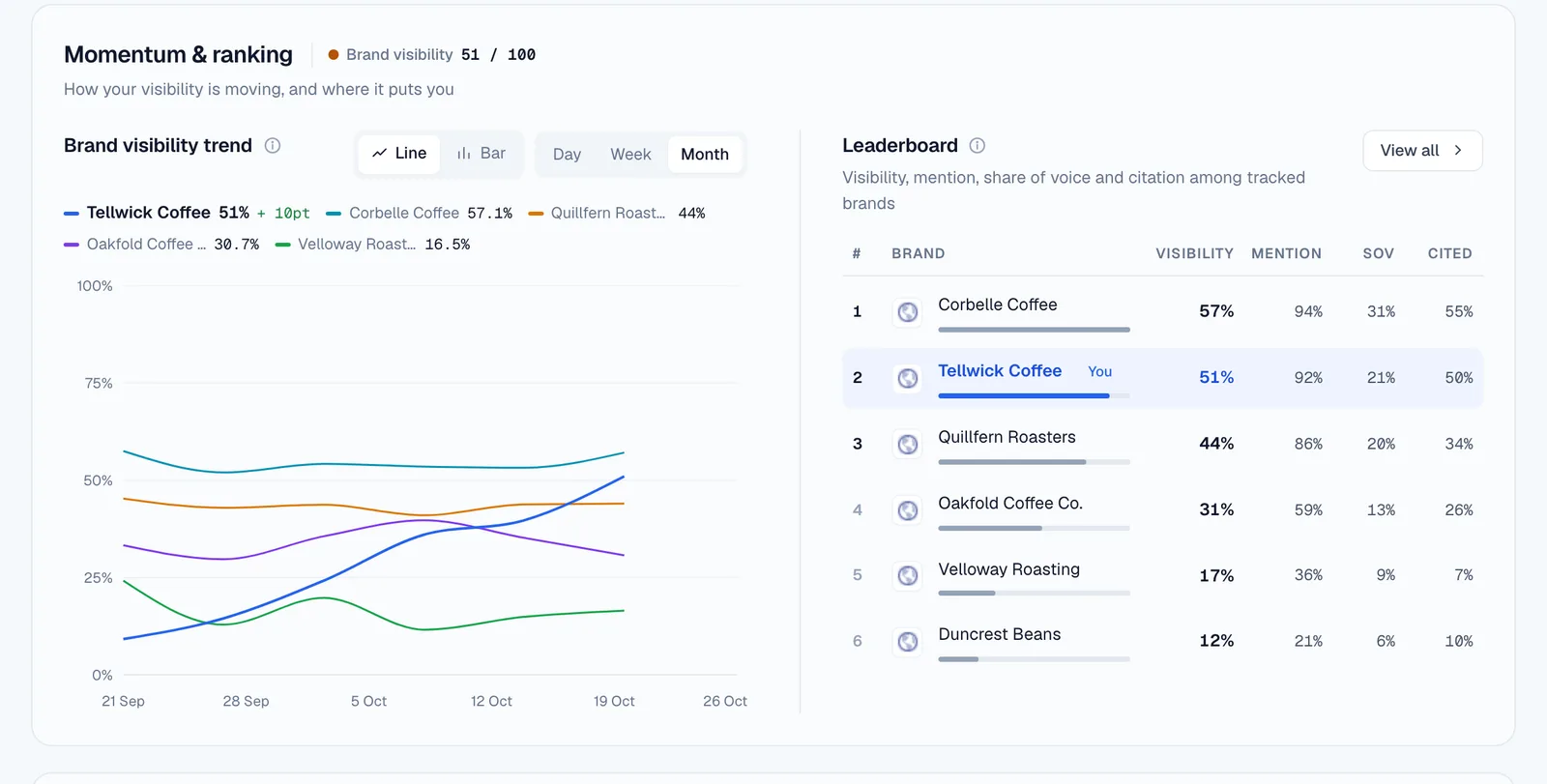
“When ChatGPT recommends companies in our category, do we appear, and how are we described?”
- Do ChatGPT, Gemini, Perplexity and Google AI Overviews name us when buyers ask about our category?
- How do they describe us, and is it accurate?
- Which competitors do they name first, and on which questions?
- Which sources do they cite, and is our own site one of them?
- What should we change to be named more often?
Four numbers, on every engine.
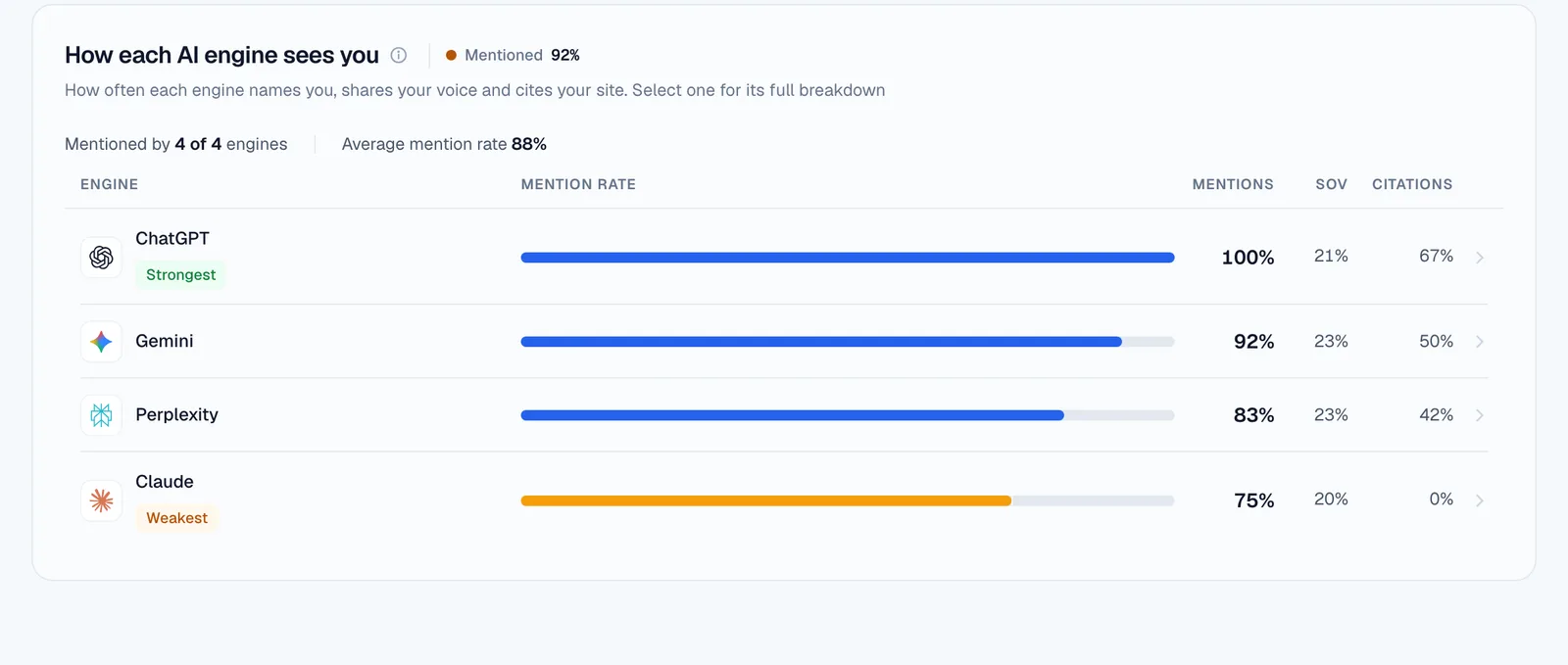
Mention rate, share of voice and citation rate make up your Brand Visibility score (30%, 40% and 30%). Each engine has its own breakdown, because ChatGPT, Gemini, Perplexity and Google AI Overviews often answer differently. How every score is calculated.
- Mention rate
- The share of answers that name you. The first sign of whether AI knows your brand at all.
- Share of voice
- Your share of all brand mentions in the answers, yours and your competitors’ together.
- Citation rate
- The share of answers that cite your site as a source. Only verified citations count.
- Competitive rank
- Where you place among the brands you track, overall and on each engine.
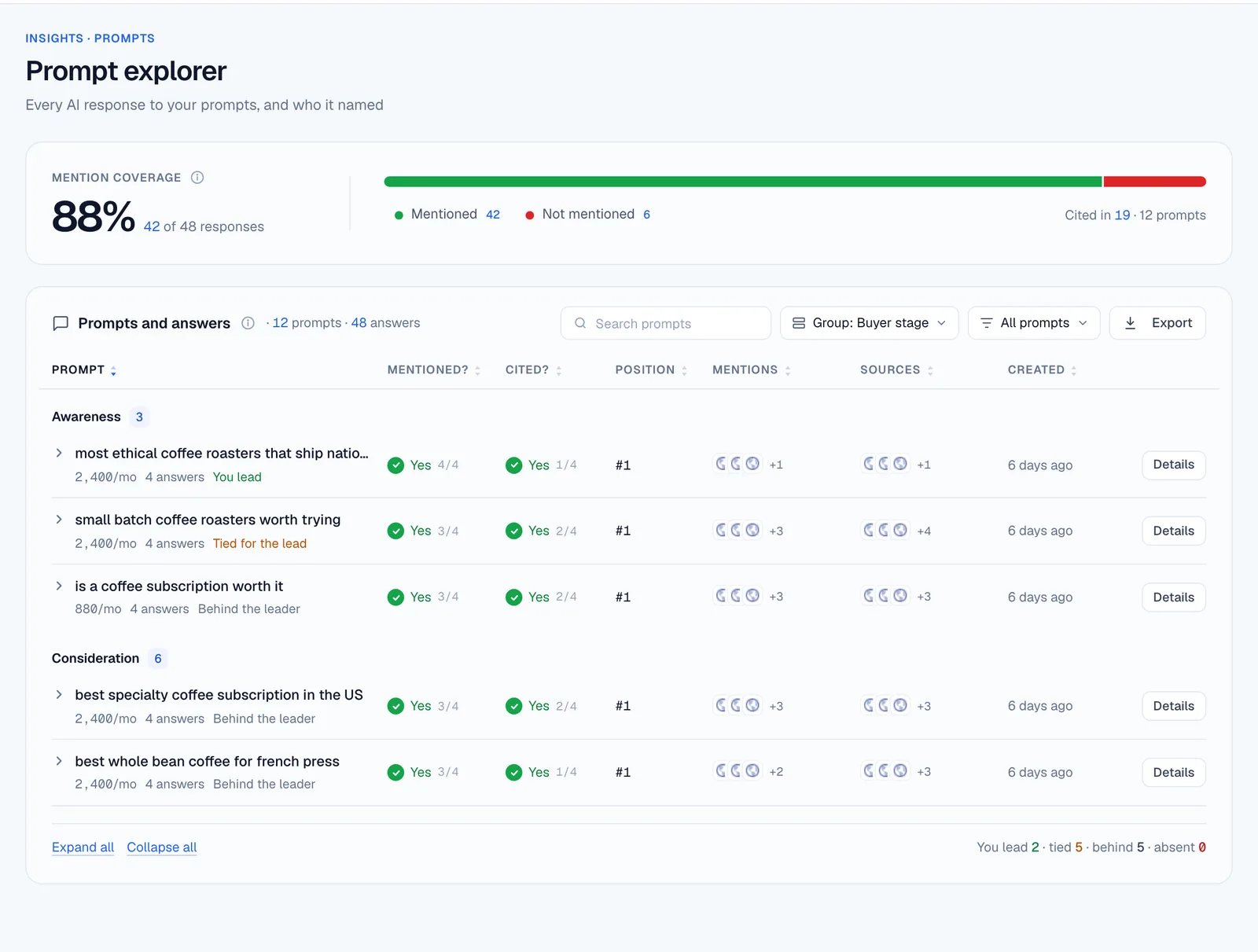
See exactly what AI said.
StarRise asks each buyer question three times on every engine in your plan and keeps every answer. For each question you see whether you were mentioned and cited, your position in the answer, and which brands and sources the engine named.
Questions are grouped by stage of the buying journey, from awareness to decision, so you can see where in the journey AI leaves you out.
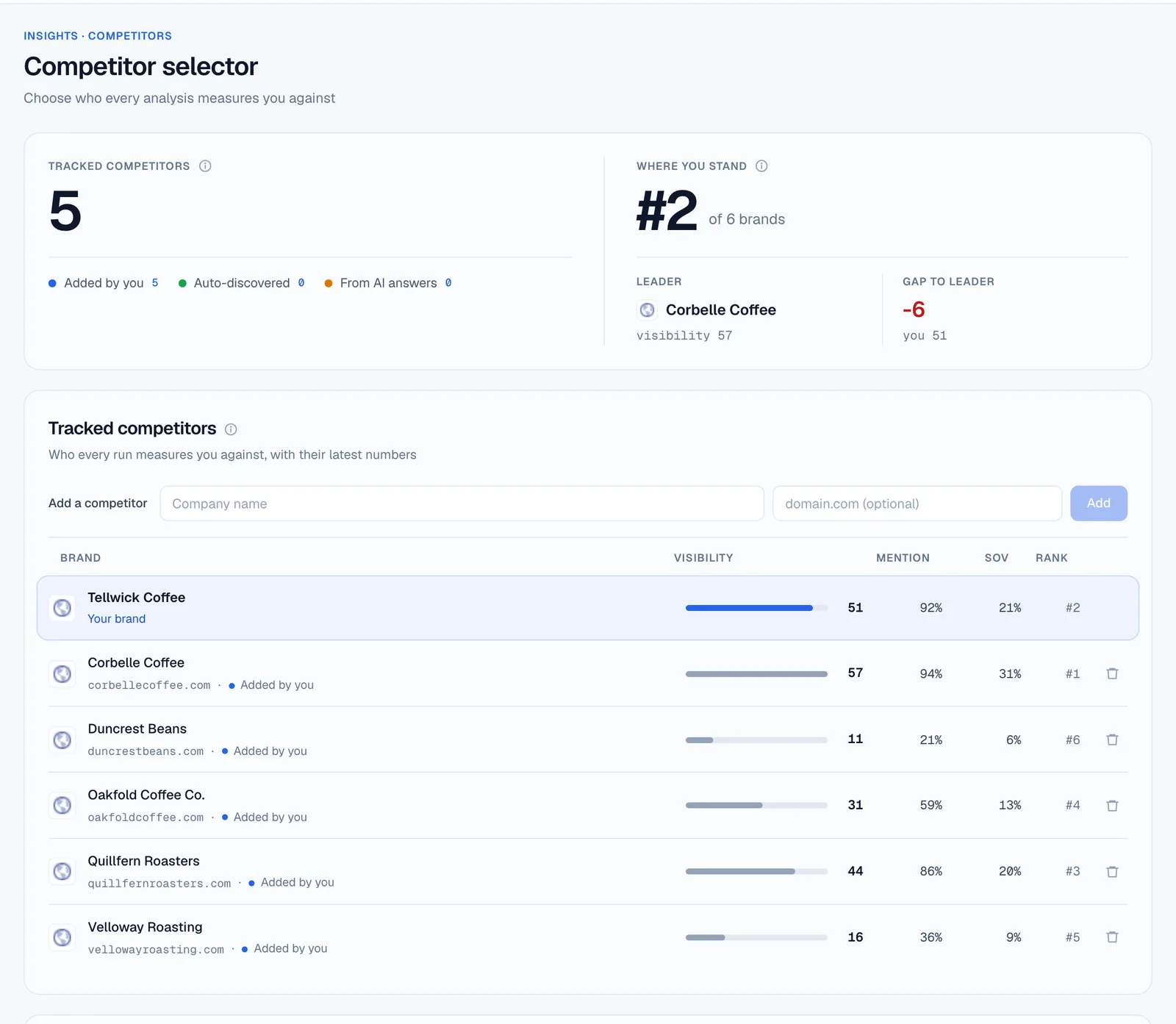
Benchmark against the brands AI names instead of you.
Choose the competitors you want to be measured against. StarRise also lists the brands the answers name alongside you that you do not track yet, so you can add them.
On Pro and White Glove, StarRise also benchmarks your social media against your competitors’ and diagnoses your website and social channels.
Then fix it, and prove it worked.
Brand Visibility is the start of the loop. Diagnose shows why you lose, Prescribe turns each gap into a ranked fix, Execute tracks the work, and Measure shows what moved.
Who uses Brand Visibility
Founders and CEOs, CMOs and Heads of Marketing, Brand and Communications Leaders, SEO and Growth Leaders, Content and Product Marketing Leaders, Digital and E-commerce Leaders, PR Leaders, and the agencies and advisors who work with them.
Brand Visibility questions
What is AI brand visibility?
How often AI engines name your brand when buyers ask them about your category, how they describe you, and whether they cite your website as a source. StarRise measures it as mention rate, share of voice and citation rate.
Which AI engines are included?
ChatGPT, Gemini, Perplexity and Google AI Overviews on paid plans, with Claude on Pro and White Glove. The Free plan runs ChatGPT.
How is this different from SEO rankings?
Search results list ten links. An AI answer names a few businesses and moves on. Ranking well in search helps, but it does not guarantee that an AI answer names you, so StarRise measures the answers themselves.
How often is visibility measured?
Weekly on paid plans and monthly on the Free plan. Pro can add daily checks between the weekly deep analyses.
Can I choose which competitors to compare against?
Yes. You add the competitors you want to track, and StarRise also shows brands the AI answers name alongside you that you do not track yet, so you can add them.
How is Brand Visibility different from Product Visibility?
Brand Visibility asks whether AI recommends your company. Product Visibility asks whether AI recommends your individual products, and scores each item in your catalog on how ready it is to be recommended.