Why AI recommends your competitors instead of you
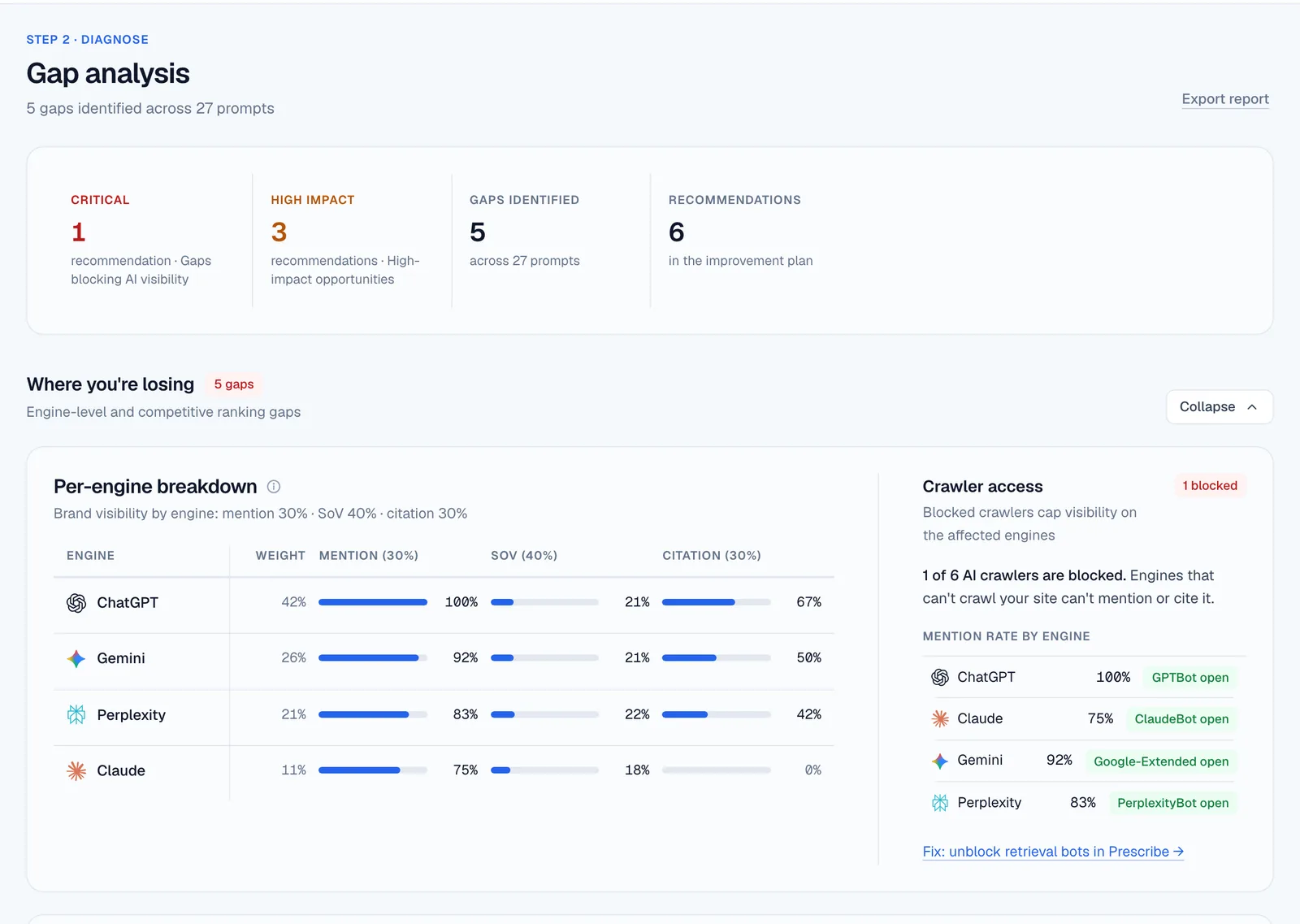
Diagnose goes question by question and engine by engine. It shows where you lose, who wins instead, and why the AI preferred their pages: access, content, coverage, citations or perception.
What's wrong?
A low score tells you there is a problem. Diagnose tells you which problem. AI engines pass a brand over for a handful of reasons, and each one has a different fix.
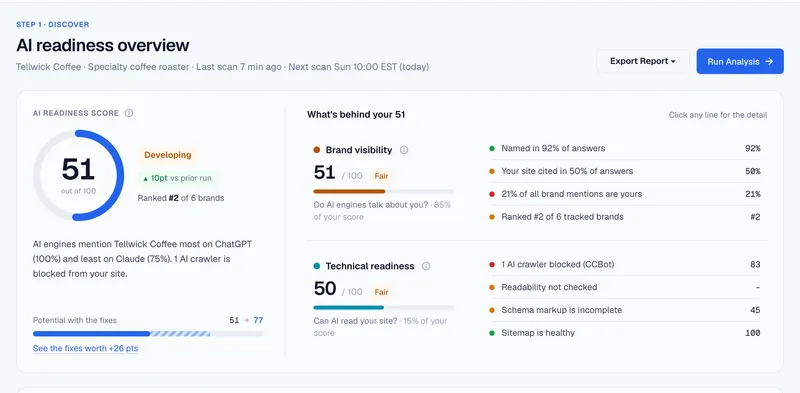
01 · Am I visible?
Discover
Your score, your rank and your results on every engine.
Discover02 · What's wrong?
Diagnose
Where you lose, to whom, and why.
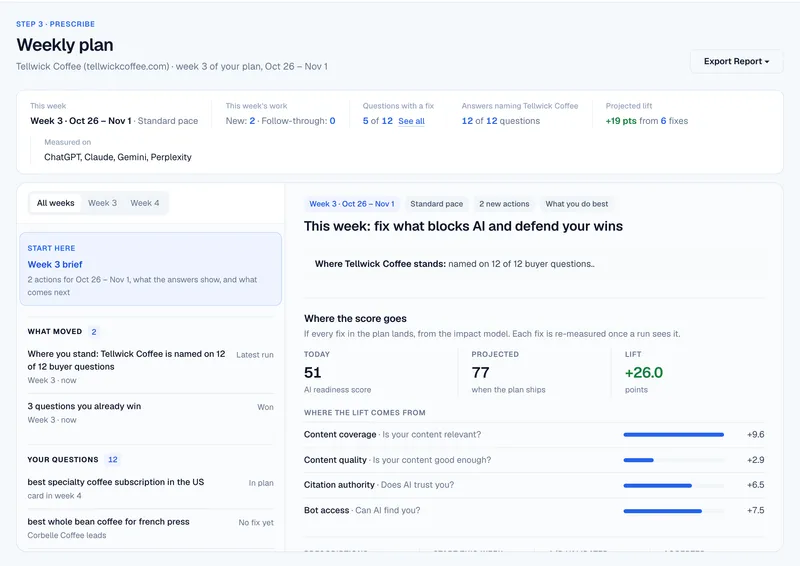
03 · How do I fix it?
Prescribe
A ranked plan with projected lift and hours.
Prescribe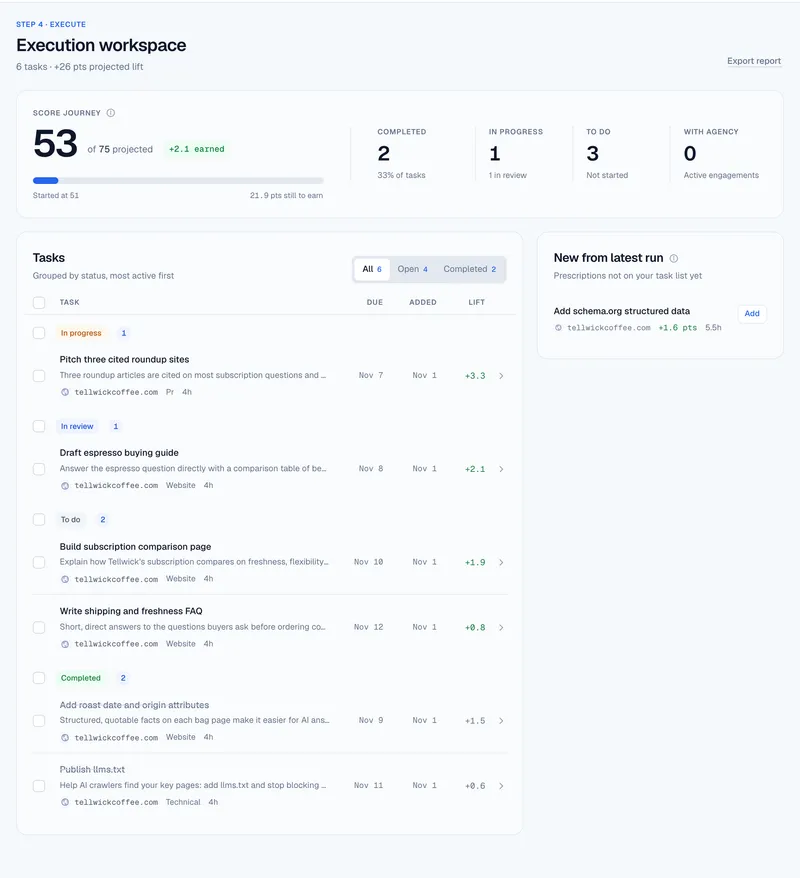
04 · Get it done.
Execute
Briefs, drafts and hands-on help.
Execute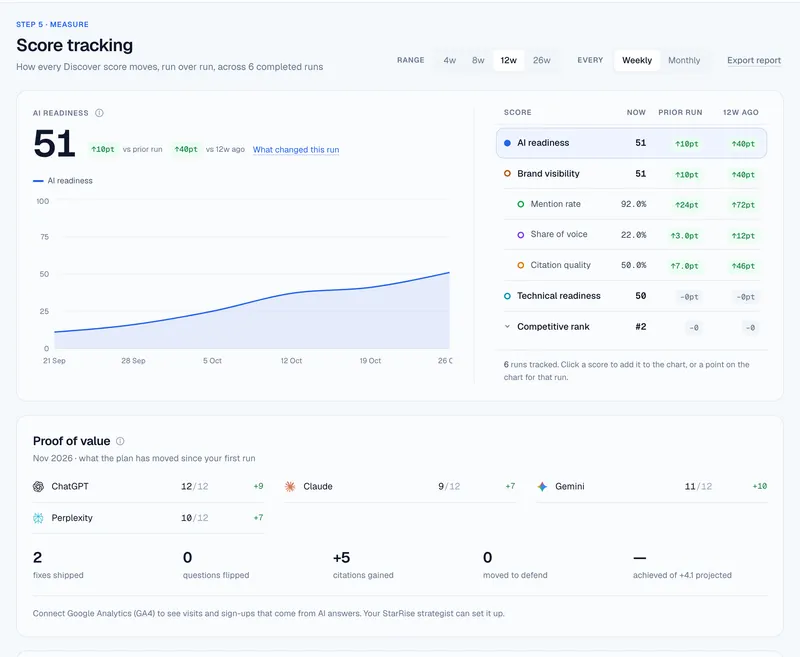
05 · Did it work?
Measure
What moved since your last run.
Measure
Six views, one diagnosis
Each view answers one part of "why not us?" Together they point at the fixes worth making first.
Per-engine breakdown
Your mention rate, share of voice and citation rate on each engine, plus the competitor table filtered engine by engine. You see where one engine likes you and another ignores you.
Prompt gap map
Every buyer question, grouped by buyer stage, with your average rank or "Missing". It shows the share of each stage you win and which questions you hand to competitors.
Sentiment & threat
How positively each engine talks about you and each competitor, and which competitors threaten your position most.
Content quality factors
Your pages and your competitors' scored on what AI engines reward: statistics, quotations, cited sources and clear answers. The biggest gaps against the strongest competitor stand out.
Citation gaps
The exact URLs AI engines cite for your competitors and not for you, ranked by how much they matter. These are the sources AI trusts in your category.
Perception
Each engine is asked directly about you and each competitor. You see the strengths, weaknesses and terms it attaches to your name, in its own words.
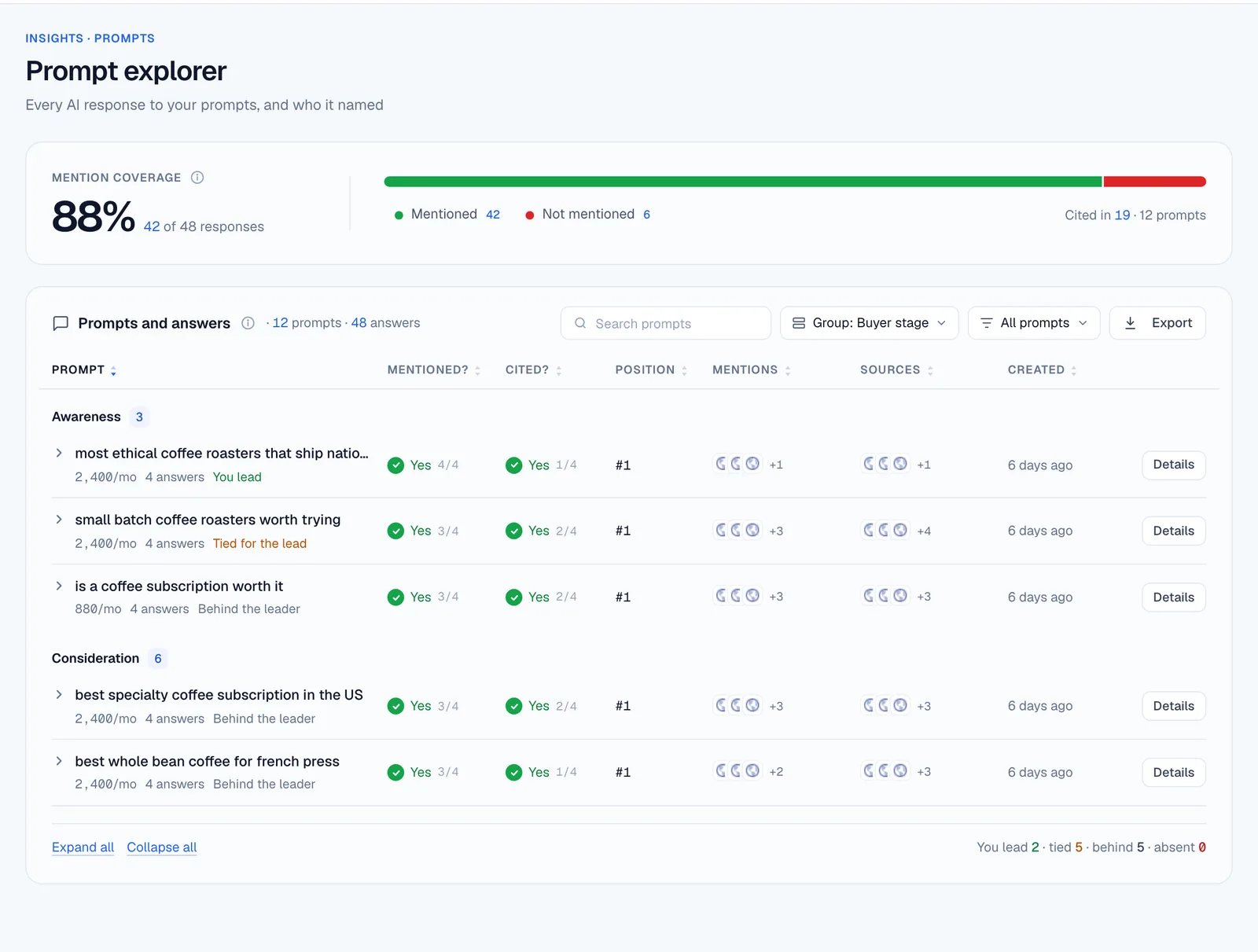
Every buyer question, every answer
Prompt Explorer shows each buyer question by stage, whether you were named and cited, your position, and which brands and sources the answer named instead.
Four checks, in the order they matter
- Can AI reach your site? A default "block AI bots" setting can hide a whole site. If crawlers can't read your pages, nothing else works. AI crawler guide
- Is your content good enough to quote? AI engines favor pages with evidence. Opinions without numbers lose to pages that have them.
- Do you answer the questions buyers ask? If you have no page for a buyer question, a competitor's page answers it.
- Do the sources AI trusts mention you? Review sites, Reddit threads, articles and social posts. Where competitors are cited and you aren't, the gap shows.
Perception · example
How one engine describes "Your brand"
Illustration. You see this for every engine and every competitor.
- Strengths: comprehensive, flexible, measurable outcomes
- Weaknesses: limited public visibility, few published results
Diagnosis grows with your plan
Every plan shows how AI describes you. The full diagnosis of your website and social channels comes with Pro's weekly deep analysis.
| Plan | What Diagnose covers |
|---|---|
| Free | How ChatGPT describes you, and your rank against one competitor. |
| Starter | How each engine describes you, with results on four engines. |
| Pro | Weekly deep analysis. AI diagnosis of your website and social channels, and competitor social media benchmarking. |
| White Glove | Everything in Pro at a larger scope, with our GEO team acting on the findings. |
Questions about Diagnose
Why does AI recommend smaller competitors over my brand?
Size doesn't decide it. AI engines name brands whose pages they can read, whose content answers the question with evidence, and whose names show up in sources they trust. A smaller competitor with a clear pricing page and a few Reddit mentions can beat a bigger brand with none.
What is the prompt gap map?
A grid of every buyer question you track, grouped by buyer stage. Each cell shows your average rank across engines, or "Missing" when the engines answered and didn't name you. Hover a cell to see the question. It shows which stages you win and which you give away.
Is AI saying something wrong about my business?
The perception view shows how each engine describes you today, in its own words. If an engine repeats a wrong or outdated claim, you see it and can fix the source: the pages and profiles the engines read.
What gets a page cited by AI engines?
What a careful editor wants: a clear definition up top, an answer paragraph that can be lifted as is, real numbers with a source, a named expert's quote, and a comparison table where options exist. Diagnose scores your pages on those factors against your competitors. More on the methodology page.
Does Reddit really matter?
For many categories, Reddit threads and review sites are among the sources engines cite most. Diagnose shows the exact threads and pages competitors are cited from, so you know where to take part as a practitioner.